The ruling means no fresh elections will be held, a move vital for Indian football since a mid-term poll could have triggered FIFA's wrath and another suspension for "third-party interference."
The Supreme Court is scheduled to hear a plea by the Enforcement Directorate (ED) alleging interference and obstruction by the West Bengal government, including Chief Minister Mamata Banerjee, in its probe into an alleged coal-pilferage scam. The ED claims Banerjee removed key evidence during raids on I-PAC offices and the premises of its director, Pratik Jain.

The Supreme Court dismissed a plea from a lawyer facing money laundering charges in the AgustaWestland VVIP helicopter deal, challenging a PMLA provision. The court stated that the lawyer should face trial like any other citizen.

Customs duty cannot be levied on electricity supplied from a special economic zone (SEZ) to the domestic market, ruled the Supreme Court on Monday while upholding Adani Power's appeal against a 2019 judgment of the Gujarat high court. The 2019 judgment had denied relief to Adani Power from Customs duty on electricity supplied from its Mundra SEZ unit to the domestic tariff area (DTA).

The Supreme Court has sought a response from the Election Commission on a plea by Trinamool Congress MPs alleging irregularities in the revision of electoral rolls in West Bengal.

The Delhi High Court has ruled that a homemaker's labor is essential for the earning spouse's success and that disregarding these contributions when determining maintenance is unjust. The court emphasized that a wife's non-employment should not be equated with idleness and that the economic value of her contributions must be recognized.

Elections to the Brihanmumbai Municipal Corporation and 28 other civic bodies in the state were held on January 15.
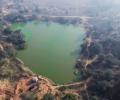
The Supreme Court has kept in abeyance its previous verdict on the definition of the Aravalli hills and ranges and proposed a high-powered committee to examine the issue.

The Supreme Court granted bail to Arvind Dham in a money laundering case, emphasizing that prolonged incarceration without trial violates the right to a speedy trial under Article 21 of the Constitution.

The application claimed that since the inception of the SIR process in the state, the EC has issued instructions to officers at the ground level through "informal and extra-statutory channels", such as WhatsApp messages and oral directions conveyed during video conferences, instead of issuing formal written instructions.

The Supreme Court has questioned the NIA regarding the detention of Kashmiri separatist leader Shabir Ahmed Shah in a terror funding case, asking the agency to justify his detention for over six years.

The Supreme Court is scheduled to hear a plea by the producer of the Tamil film "Jana Nayagan," starring Vijay, challenging a Madras High Court order that stayed the granting of a censor certificate to the movie. The film's release has been delayed due to certification issues.
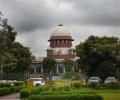
The Supreme Court denied bail to activists Umar Khalid and Sharjeel Imam in the 2020 Delhi riots conspiracy case, citing prosecution material suggesting their involvement in planning and strategic direction. The court granted bail to other activists but emphasized the seriousness of the allegations against Khalid and Imam.
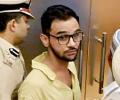
The Supreme Court has refused to grant bail to activists Umar Khalid and Sharjeel Imam in the 2020 Delhi riots conspiracy matter, citing a prima facie case against them under the UAPA. However, bail was granted to other activists in the same case.

The new UGC regulations mandating all higher education institutions to form "equity committees" to look into discrimination complaints and promote equity were notified on January 13.
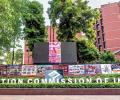
The Election Commission (EC) defended its power to revise electoral rolls and ensure no foreigners are registered as voters before the Supreme Court. The EC argued it has a constitutional duty to maintain the purity of electoral rolls and exclude those not eligible to vote.

After the US Supreme Court struck down President Donald Trump's global tariffs, Congress leader Rahul Gandhi accused Prime Minister Narendra Modi of being "compromised", saying his "betrayal" in the India-US interim trade deal stood exposed.

The University Grants Commission's (UGC) new regulations on promoting equity in higher education institutions have sparked protests and legal challenges. This article explains the regulations, the concerns raised, and the government's response.

Police in Palghar, Maharashtra, have registered a case against four individuals for allegedly selling a tribal woman for marriage for Rs 3 lakh and subjecting her to harassment. The woman alleges physical and mental torture, casteist slurs, and assault.
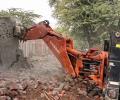
'Even as the Supreme Court's anti-punitive demolition judgment nears its first anniversary, no formal contempt proceedings have been initiated either by the Supreme Court or any high court against officers or demolition squads who have acted in violation of it.'

The CBI will challenge the suspension of life sentence and bail granted to former BJP MLA Kuldeep Singh Sengar in the Unnao rape case in the Supreme Court. The decision follows a Delhi High Court order suspending Sengar's sentence. Rahul Gandhi has criticized the decision and met with the survivor.
The survivor of the 2017 Unnao rape case has vowed to challenge the Delhi High Court's decision to suspend the jail term of Kuldeep Singh Sengar in the Supreme Court, calling the decision a 'death' for her family. The survivor and activists are protesting the decision, citing safety concerns and a weakening of faith in the justice system.

US President Donald Trump announced a new global levy on imported items, resulting in a lower tariff rate for India, following a Supreme Court verdict against his previous sweeping tariffs.

"How can an officer be suspended for judicial orders which can be appealed against and rectified by the higher judiciary?" he asked.

A 23-year-old Dalit house surgeon in Siddipet district allegedly died by suicide after being betrayed by a senior resident doctor who refused to marry her due to caste differences. Police have arrested the accused and registered a case under the BNS and SC/ST Act.

According to the prosecution, the appellant enticed away the informant's minor daughter on the pretext of marriage, took her to Bangalore and established a physical relationship.

Ashoka University professor Ali Khan Mahmudabad, previously booked for social media posts, has petitioned the Supreme Court for the release of his passport, a condition of his bail. The court will consider the plea on November 18.

"We did not know that a CBI inquiry was requested on our behalf regarding the Karur tragedy. It has been nine years since my husband Panneerselvam, who had signed the petition, abandoned us," says Sharmila, mother of the 9-year-old boy who had lost his life in the stampede during a political rally addressed by actor-politician Vijay.
The Supreme Court has quashed the conviction of a man in a rape case, noting the complainant and the convict have married each other and observed that the consensual relationship between the parties was given a criminal colour owing to a misunderstanding.

The Supreme Court issued interim directions permitting the sale and bursting of green firecrackers in Delhi and the National Capital Region (NCR) during Diwali, outlining specific rules and restrictions.
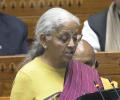
This Budget positions India's taxation ideology as not merely a revenue source but as a strategic catalyst for growth, inclusion and long-term confidence.

'People don't believe that a 15-year-old girl subjected to sexual intercourse within a marriage is a victim of rape.'
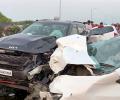
The Supreme Court of India is considering formulating pan-India guidelines to prevent road accidents on expressways and national highways, following a fatal accident in Rajasthan. The court is focusing on the issue of illegal 'dhabas' and encroachments along highways as potential causes of accidents.
The Supreme Court has raised concerns about the forensic examination of leaked audio clips related to the 2023 ethnic violence in Manipur, questioning why the entire available audio was not sent for analysis.

Maharashtra Chief Minister Devendra Fadnavis announced the state government's intention to introduce strong provisions to deal with religious conversions done using force or cheating. A panel has submitted recommendations, and the government will study and implement necessary changes. The move comes amid claims of misuse of religious freedom and concerns about conversions through coercion and deceit.

RSS chief Mohan Bhagwat stated he will continue in his role despite his age, stepping down only when the organization directs him to do so. He also discussed the importance of values and communication within the RSS.

The Supreme Court on Friday sought responses from the Centre, Uttar Pradesh government and others on a plea filed by a woman advocate alleging illegal detention and custodial sexual assault at a police station in Noida.

The Supreme Court on Tuesday stayed trial proceedings against former Karnataka chief minister BS Yediyurappa in a sexual harassment case filed under the Protection of Children from Sexual Offences Act.

Peace prevailed at the disputed 11th-century Bhojshala-Kamal Maula Mosque complex in Madhya Pradesh's Dhar district on Friday as Hindus performed puja to mark Basant Panchami festival while Muslims offered namaaz within the same premises but at a different location.

The Supreme Court on Friday dismissed a plea of Byju Raveendran, the promoter of Think and Learn Private Limited that operates ed-Tech firm Byju, challenging an NCLAT order which has mandated that the settlement of the BCCI's claim be placed before the Committee of Creditors.
